Pack Less, Spend Less, Stress Less: The Honest Hostel Packing Guide
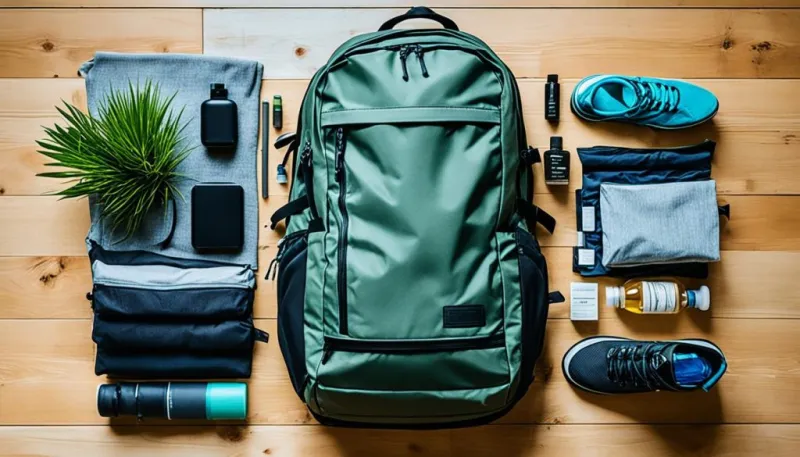
Photo: backpack packing minimalist travel gear hostel dorm, via www.bestsimpleideas.com
Every few months, a new "ultimate packing list" makes the rounds on travel blogs, and almost every single one of them is written by someone who has clearly never wrestled a 65-liter rolling suitcase up a narrow hostel staircase at midnight while trying not to wake six sleeping strangers.
Hostel packing is its own discipline. It rewards minimalism, punishes overpacking, and demands that you think about your gear differently than any other kind of travel. This isn't about fitting everything into a carry-on for a weekend in Miami. This is about living out of a bag for weeks or months, moving through multiple climates, sharing bathrooms with strangers, and keeping your costs as low as possible along the way.
Here's what actually goes in the bag — and what you leave at home and buy when you get there.
The Non-Negotiables (Yes, You Actually Need These)
A 40-liter backpack, maximum. Not 55. Not 65. Forty. This is the size that fits in overhead bins, doesn't destroy your back on long travel days, and forces the discipline of only bringing what you genuinely need. If you can't fit your trip into 40 liters, you're bringing too much.
A quality sleep liner. This is non-negotiable for dorm stays. A lightweight silk or microfiber sleep liner adds a layer of comfort and hygiene on questionable hostel mattresses and stuffs down to almost nothing. Don't skip this one.
A compact, fast-drying towel. Hostel bathrooms are shared, towels are rarely included, and a regular cotton towel takes forever to dry in a dorm room. A microfiber travel towel solves all three problems and takes up about as much space as a paperback book.
A quality padlock. Most hostel lockers require you to bring your own. Get a TSA-approved combination lock so you're not fumbling with a key at 2am.
Noise-canceling earbuds or earplugs. Dorms are loud. Someone will snore. Someone will come in at 3am with the energy of a person who has just discovered nightlife for the first time. Protect your sleep.
A portable power bank. Outlet access in dorms is competitive. A decent-sized power bank means you're never fighting over the one plug near the bottom bunk.
What You're Definitely Overpacking
Let's talk about the stuff that ends up at the bottom of the bag, never gets touched, and gets abandoned on a hostel free shelf in week two.
More than three to four outfits. Hostels have laundry facilities. So do laundromats, which exist literally everywhere. You do not need ten days of clothing. You need four days of clothing and the willingness to do laundry every few days. Pack clothes that mix and match, dry fast, and don't show wrinkles.
A full-size toiletry kit. You don't need a 16-ounce shampoo bottle. You need a small decanted amount to get you to your destination, where you will buy a local version for a fraction of what you'd pay in the US. More on this below.
A first aid kit the size of a tackle box. A small, curated kit — bandaids, blister pads, ibuprofen, antidiarrheal medication, a few allergy tablets — is smart. A full pharmacy is not. Pharmacies exist in every country.
Multiple pairs of shoes. Two pairs. One pair of versatile walking shoes that can handle a hike, a city day, and a casual dinner. One pair of flip flops for shared showers and beach days. That's it.
Books. Physical books are heavy and take up valuable space. Use a Kindle or a phone app. If you insist on physical books, use the hostel book exchange system — leave one, take one — and you'll never need to carry more than one at a time.
What to Buy at Your First Destination (And Why)
This is where the real money-saving move lives, and most packing guides completely ignore it.
In most of the destinations popular with US backpackers — Southeast Asia, Central America, Eastern Europe, parts of South America — everyday items are dramatically cheaper than they are at home. Buying locally doesn't just save luggage space. It saves real money and often gets you a better product suited to the local climate.
Toiletries. Shampoo, conditioner, body wash, sunscreen, insect repellent — all of these are available everywhere, often at a fraction of US retail prices. Bring a small travel-sized amount to get through your first day or two, then buy locally. This alone can cut several pounds from your starting pack weight.
Lightweight clothing. If you're heading somewhere hot and humid — Thailand, Vietnam, Colombia, Mexico — the locally available lightweight clothing is perfectly suited to the climate, extremely affordable, and easy to pick up at any market. Many backpackers intentionally pack light on warm-weather clothing and buy a few pieces at their first stop.
Laundry detergent. If you plan to hand-wash clothes in hostel sinks — a completely viable strategy — buy a small amount of local detergent on arrival. Don't pack it from home.
Adaptors and cables. Depending on your destination, local electronics markets often have cheaper adaptors than anything you'd find at an airport or a US travel retailer.
The Hostel-Specific Details Most Lists Miss
A few things that matter specifically for dorm life that generic packing guides never address:
A small, dim headlamp. Not a flashlight — a headlamp with a red-light setting. When you need to find something in your bag at 6am without waking your dorm mates, you'll be grateful.
A dry bag or packing cubes. Shared bathroom environments mean your bag occasionally gets damp. Keeping your clothes and electronics in a dry bag or organized packing cubes protects your gear and makes it dramatically easier to find things in a full backpack without unpacking everything.
A door stopper alarm. Optional, but popular among solo travelers — especially solo women — for added security in private or semi-private rooms.
A reusable water bottle with a filter. Reduces plastic waste, saves money on bottled water, and in destinations where tap water isn't safe, a filter bottle means you're covered without constantly buying single-use plastic.
The Real Rule
If you're unsure whether to pack something, ask yourself one question: if I left this behind and needed it, how hard would it be to buy one at my destination? If the answer is "not very hard," leave it. The lighter you travel, the faster you move, the less you spend, and the more you enjoy the whole thing.
That's the hostel way.