Dorm Life and Deep Sleep: The Unexpected Reason Hostel Travelers Wake Up More Rested
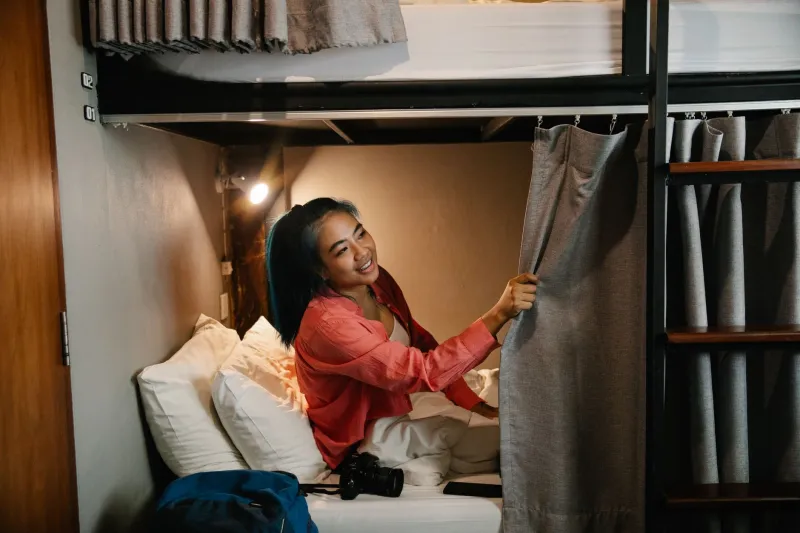
Let's be honest — when most people picture sleeping in a hostel, "restful" isn't the first word that comes to mind. They picture creaky bunk beds, someone rustling a plastic bag at 2 a.m., and a bathroom shared with eleven strangers. And yet, a growing number of budget travelers are coming back from trips saying the same thing: they slept better in a dorm room than they ever do at a Marriott.
That sounds like the punchline to a bad travel joke. But sleep researchers, seasoned backpackers, and even a few reluctant converts are starting to take this phenomenon seriously. So what's actually going on?
The Luxury Trap Nobody Talks About
Here's the thing about high-end hotels: they're engineered to feel special. Pillow menus. Blackout curtains. Climate control systems with seventeen settings. The minibar stocked with $9 sparkling water. And while all of that sounds incredible in theory, there's a psychological cost that often goes unexamined.
Sleep specialist Dr. Erin Chavez, who consults with travel wellness programs, puts it plainly: "When people are in an environment that signals 'this is expensive,' their brains stay partially alert. There's a low-level anxiety around not wasting the experience, not messing up the room, not missing the included breakfast. That hyperawareness is the enemy of deep sleep."
In other words, the more money you've spent on where you're sleeping, the harder it can be to actually sleep there. Your brain is quietly doing the math all night.
Hostels, by contrast, carry almost no such weight. You paid $18 for a bunk. There's nothing to protect. Nothing to optimize. You just... crash.
Physical Exhaustion Is a Real Factor — And Hostels Earn It
Another piece of the puzzle is how hostel travelers actually spend their days. Budget travelers aren't typically lounging by a rooftop pool waiting for a cabana boy to bring them a frozen drink. They're walking — a lot. They're navigating public transit, hauling packs up cobblestone hills, hitting free walking tours, and squeezing every ounce of experience out of every dollar.
By the time a hostel traveler hits their bunk, they've usually logged eight to twelve miles on foot and made forty decisions before noon. That's not insomnia territory. That's collapse territory.
Jordan M., a 29-year-old from Portland who spent four months backpacking through Southeast Asia, described it this way: "I'd be asleep before my head finished hitting the pillow. Didn't matter if someone was watching Netflix two bunks over. My body was just done."
Compare that to a hotel guest who took an Uber from the airport, ordered room service, and spent the afternoon working remotely from the king bed. Physically, they're nowhere near tired enough for genuine, restorative sleep.
The Social Exhaustion Effect (In a Good Way)
There's also something to be said for what researchers call "social satiation" — the feeling of having genuinely connected with other people during the day. Hostel common rooms, shared dinners, and impromptu rooftop conversations aren't just fun. They're filling a basic human need that, when met, actually helps regulate your nervous system before bed.
Dr. Chavez explains: "Social connection reduces cortisol levels. When people feel seen and engaged — even briefly, even with strangers — their stress hormones drop. That's a physiologically ideal state for falling asleep."
Hotels, for all their amenities, tend to be isolating. You check in, ride a silent elevator, and disappear into your room. Nobody knows your name. Nobody asks where you're headed tomorrow. That isolation might feel like privacy, but it can quietly spike anxiety in ways that disrupt sleep architecture.
Routine by Necessity
One of the most underrated sleep hacks in existence is consistency — going to bed and waking up at roughly the same time each day. And while it sounds counterintuitive, hostel life often enforces this more reliably than hotel stays do.
Hostels have checkout times. Shared bathrooms create natural morning queues that get you up and moving. Common areas close. Dorm lights go out. The social rhythms of a hostel create a loose but real structure that your circadian clock quietly appreciates.
Hotel stays, on the other hand, often encourage the opposite. Sleep in as long as you want. Order breakfast at noon. Stay up watching cable TV until 1 a.m. because hey, you're on vacation. That kind of schedule chaos is genuinely hard on your sleep cycle, even when it feels indulgent.
What About the Noise?
Okay, fair. Dorm rooms are not silent. Someone will snore. Someone will come in late with their headlamp blazing. These are facts of hostel life, not myths.
But here's where it gets interesting: sleep research suggests that familiar ambient noise — even inconsistent sounds — can become background noise your brain learns to filter. Many long-term hostel travelers report that after a few nights, the sounds of a dorm room stop registering as disruptive. Your brain categorizes them as non-threatening and moves on.
Hotel rooms, meanwhile, are so aggressively silent that any small sound — an ice machine down the hall, an HVAC click — can jolt you awake precisely because it stands out against the quiet.
There's also the growing popularity of earplugs and sleep masks among hostel regulars, which have the added benefit of creating a consistent pre-sleep ritual — another thing sleep experts universally recommend.
The Takeaway for Budget Travelers
None of this means hostels are objectively better than hotels for sleep — context matters, and a solo traveler with chronic insomnia probably needs different accommodations than a 24-year-old on a gap year. But the narrative that budget accommodations automatically mean bad sleep? It doesn't hold up.
In fact, the combination of physical exhaustion, genuine social connection, enforced routine, and zero financial anxiety might be creating sleep conditions that a five-star hotel simply can't replicate — no matter how expensive the mattress.
So next time someone raises an eyebrow at your hostel booking, just smile. You might be the one waking up actually rested.
Looking for your next budget stay? Browse hostel listings worldwide at Arashima Hostel and find a bunk that fits your route — and your sleep schedule.