Why Your Hostel Photos Hit Different (And Resort Snaps Fall Flat)
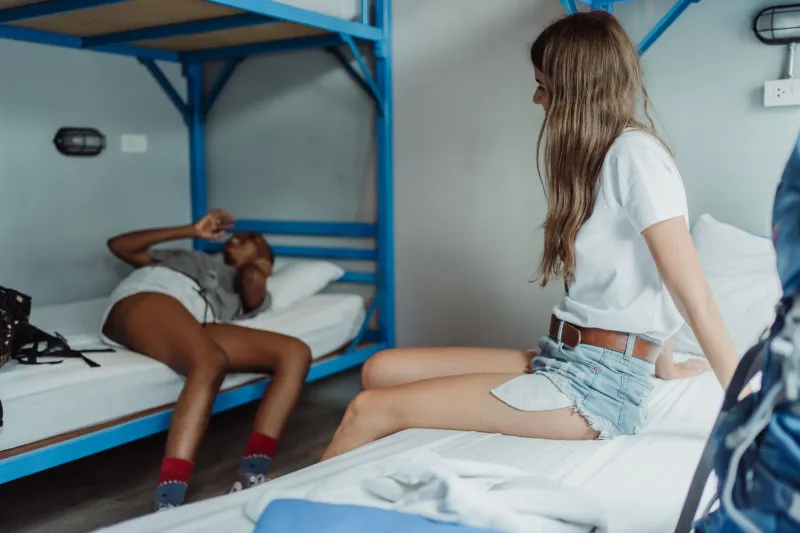
Scroll through any travel influencer's feed and you'll notice something interesting. The photos that stop your thumb mid-swipe — the ones that rack up comments like where IS this? and this looks so real — almost never come from a poolside cabana at a Cancún resort. They come from a rooftop in Lisbon where six strangers are sharing a bottle of wine. From a cramped dorm hallway in Bangkok where someone's guitar is leaning against a bunk bed. From a street market in Oaxaca stumbled upon because a hostel receptionist scribbled a hand-drawn map on a napkin.
Budget travelers are quietly becoming the best visual storytellers in the game — and it has almost nothing to do with camera gear.
The Resort Trap Nobody Talks About
Here's the thing about luxury travel content: it's gorgeous, and it's boring. Not because the places aren't beautiful, but because they're designed to look beautiful. Every angle has been optimized. The infinity pool was built to be photographed. The plated breakfast was arranged by someone whose job is literally to make food look perfect. When everything is curated for you, your camera is just copying someone else's vision.
Resort guests often end up with what photographers call "catalog shots" — technically clean images that feel emotionally hollow. You can tell the difference between a photo someone took and a moment someone lived. Algorithms can tell the difference too, by the way. Engagement data consistently shows that raw, imperfect, emotionally resonant images outperform polished content, even when the polished content is objectively prettier.
Hostel life has no set design team. Nobody staged the moment your dorm roommate from São Paulo taught three strangers how to play truco at 1am. That's just Tuesday.
Chaos Is Actually a Creative Advantage
When you're staying somewhere that costs $25 a night, you're not cocooned from the world — you're dropped directly into it. You eat where locals eat because the hostel staff told you to. You end up in neighborhoods that didn't make the guidebook. You wake up early not because you planned to, but because someone's alarm went off and now you're watching the sunrise from the fire escape with a cup of instant coffee.
Those unscripted moments are exactly what makes compelling visual content. Spontaneity creates genuine emotion, and genuine emotion is what people actually connect with when they stop scrolling.
Budget travelers also tend to move more — more cities, more neighborhoods, more transportation modes, more types of people. That variety naturally produces a richer visual portfolio than a week spent inside a single resort compound. You're not collecting backdrops; you're collecting experiences, and the difference shows.
The People Make the Picture
One of the most underrated elements of hostel photography is the cast of characters you're constantly surrounded by. Your photos aren't just of places — they're of people, and that human element is what transforms a travel shot into a story.
The Arashima Hostel community is a good example of what this looks like in practice. When travelers from a dozen different countries are sharing a kitchen, a common room, or a walking tour they organized themselves, the interactions that unfold are genuinely interesting. A photo of two people laughing over a failed cooking attempt in a hostel kitchen carries more narrative weight than a perfectly plated dish at a five-star restaurant. One tells you something about connection. The other tells you something about money.
Documenting the people around you — with their permission, always — is the single fastest way to elevate your travel photography from pretty to powerful.
Practical Tips for Capturing Real Moments on a Real Budget
You don't need a DSLR, a drone, or a ring light. Here's what actually works:
Shoot during the golden hours, not just at landmarks. The hour after sunrise and the hour before sunset make everything look cinematic. And as a hostel traveler who's often out early or staying out late, you're already positioned to catch this light naturally.
Use your phone's portrait mode sparingly. The blurred background effect is overused and often looks artificial. Real depth of field — achieved by getting physically close to your subject — looks far more authentic and requires zero post-processing.
Document the in-between moments. The bus ride. The map spread out on a hostel bed. The muddy boots by the door. These transitional images give your travel story texture and make your highlights feel earned.
Ask, don't just snap. Taking a second to connect with someone before photographing them almost always produces a better image. Candid shots taken with permission have a warmth that stolen moments don't.
Embrace imperfection. A slightly blurry photo of a genuinely funny moment beats a technically perfect shot of nothing in particular. Stop deleting the "messy" photos — those are often the ones people remember.
Tell the story in your caption. Budget travelers have stories. Use them. A photo of a crowded hostel dorm is just a photo until you explain that the five people in it met 48 hours ago and are now planning a road trip together. Context is the difference between content and connection.
The Authenticity Economy
There's a broader cultural shift happening in how Americans consume travel content. The era of aspirational perfection — the influencer floating in a private pool, the hotel suite flat-lay — is losing its grip. Audiences are increasingly drawn to creators who feel like real people having real experiences, not models performing luxury.
Budget travelers fit that mold almost by default. You're figuring things out in real time. You're making decisions based on what's actually interesting rather than what's been pre-approved by a brand partnership. You're sharing space with strangers and finding out that strangers are mostly pretty great. That's a story worth telling.
And here's the kicker: the best hostel travel content isn't just more relatable — it's more useful. When someone sees your photo from a $15-a-night spot in Porto with a caption explaining exactly how you found it, booked it, and what the vibe was actually like, that's actionable information. It helps people. It builds trust. It creates a community around shared experience rather than shared aspiration.
You Don't Need a Bigger Budget. You Need Better Eyes.
The most memorable travel photos you'll ever take won't come from a place that costs more. They'll come from a moment you were actually present for — unscripted, unfiltered, and genuinely surprised by what was happening around you.
Hostel life manufactures those moments constantly. The unpredictability that first-time budget travelers sometimes find stressful is the exact same thing that makes the memories worth keeping. Lean into it. Bring your camera or just your phone. Pay attention.
The best shot of your trip is probably waiting in a dorm room, a communal kitchen, or a side street someone at the front desk mentioned almost as an afterthought.
That's the real Arashima effect — and no resort package comes close to replicating it.