The Complimentary Breakfast Audit: What Hostel Freebies Really Cost You
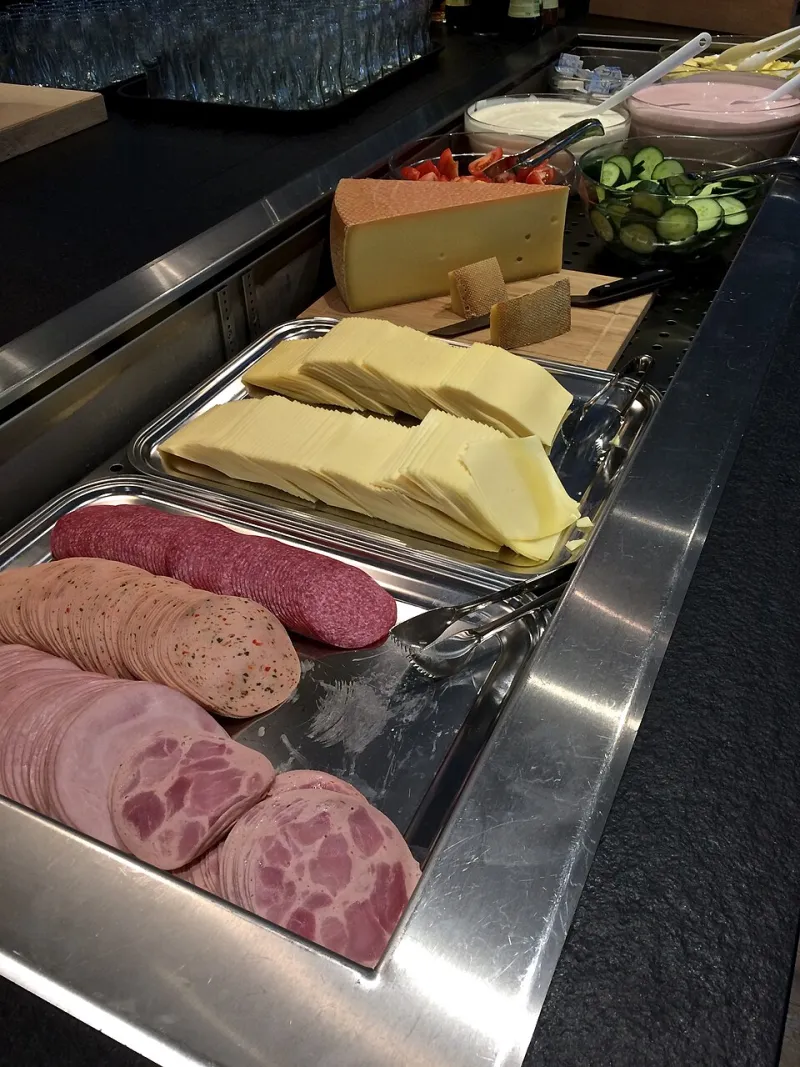
Photo: Geolina163, CC BY-SA 4.0, via Wikimedia Commons
Every hostel listing has its buzzwords. "Rooftop bar." "Walking tours." "Free breakfast." That last one is the sneakiest, because it lands in your brain as money already saved. Show up, grab a plate, done. But after a few years of hostel-hopping, you start to notice something: the travelers who skip the free spread and eat where the locals eat are often the ones with more cash at the end of the week — and considerably better stories.
So let's actually audit the thing. No outrage, no hot takes, just a breakdown of when the hostel morning spread pays you back and when it's a marketing line wearing a bathrobe.
The Three Tiers You'll Actually Encounter
Almost every hostel breakfast on earth falls into one of three buckets.
Tier 1: The Token. Instant coffee, a loaf of white bread, margarine, and a jar of jam that has clearly been through several governments. Cost to the hostel per guest: somewhere around 60 cents to a dollar. Cost to you if you skip it and buy a proper breakfast nearby: $2 to $5 in most of the world. Verdict: worth five minutes, not worth twenty.
Tier 2: The Continental Plus. Real coffee or an espresso machine, eggs, fruit, yogurt, maybe a pancake station. This one costs the hostel $2 to $4 per head and would run you $8 to $15 at a café in a Western city. Verdict: this is the tier where free breakfast genuinely starts to matter.
Tier 3: The Full Spread. Think Turkish kahvaltı with olives, cheese, tomato, cucumber, and fresh bread; a Southeast Asian setup with rice, eggs, and fruit; a Latin American plate with beans, plantains, and arepas. Hostels charging $25–$40 a night sometimes put out a breakfast worth $6–$10 in local restaurant value. Verdict: book these places and set an alarm.
The Regional Reality Check
Where you are changes the math completely, because the free breakfast is only "free" relative to what the alternative costs.
- Western Europe and the US/Canada: Street breakfast is expensive, so a hostel with real eggs and decent coffee saves you real money — often $8–$14 a day. Coffee alone is $3.50–$5 in most US cities.
- Portugal, Spain, Italy: A standing espresso and a pastry runs €2–€3.50. If the hostel is serving sad white bread, walk out. The bar down the street is cheaper than the value of your time.
- Mexico and Central America: Street tamales, fresh fruit, or a market breakfast can cost $1.50–$3. A hostel "free breakfast" of cornflakes is not competing.
- Southeast Asia: A bánh mì, a bowl of noodles, or roti canai runs $1–$2.50 and is a better meal than anything a hostel toaster produces. Breakfast here is a cultural experience, not a cost-saving exercise.
- Australia and New Zealand: Groceries and cafés are brutal, so a hostel that puts out eggs, cereal, and real coffee is worth serious points on your booking decision.
The Time Tax Nobody Budgets For
The cost of hostel breakfast isn't just in the bread — it's in the clock. A meaningful chunk of budget travelers lose 30 to 45 minutes every morning to the buffet ritual: waiting for the toaster, waiting for the one working burner, waiting for the person ahead of you to finish Instagramming their eggs.
Do that for a two-week trip and you've spent somewhere between six and ten hours standing near a communal kettle. That's half a day you didn't spend at a market, on a walking route, or in a neighborhood you came to see.
There's also the appetite trap. Free food nudges you to eat more than you want, earlier than you want, and then skip the one meal a city is actually famous for. Grazing at 8 a.m. so you're not hungry at 11 a.m. is not saving money — it's just relocating the spend.
A Practical Value Checklist
Before you let "free breakfast included" tip a booking decision, run these six questions.
- What's in the photos? Hostels that are proud of their breakfast photograph it. A single shot of a coffee cup and a croissant is a warning, not a teaser.
- What time does it run? If it ends at 9 a.m. and you're a slow riser, it's not a benefit. It's pressure.
- What does the same meal cost nearby? Ten seconds on a maps app tells you whether you're gaining $3 or $12.
- Is it self-catered or served? A kitchen you can use freely at any hour beats a supervised 7–9 a.m. window almost every time.
- Does it include real coffee? Instant granules are a signal about how the rest of the listing was put together.
- Is it a communal table or a grab-and-go counter? The social value can outweigh the dollar value, and it's worth pricing that in.
The Move That Actually Works
Treat hostel breakfast like a bonus, not a reason. Book the property for its location, its kitchen, and its people. Then, on the morning you wake up early and the spread looks good, take it and tip the person refilling the eggs. On the morning you don't, walk out the door and eat whatever the neighborhood is famous for — because that's the meal you'll remember in five years, and it usually costs less than a sad airport sandwich back home.
Free breakfast isn't a scam. It's just a small line item that deserves the same scrutiny as the nightly rate. Audit it once per trip and you'll start seeing which hostels mean it — and which ones are just hoping you don't notice the bread.