One Night Turned Into Six Months: The Accidental Long-Haul Hostel Story
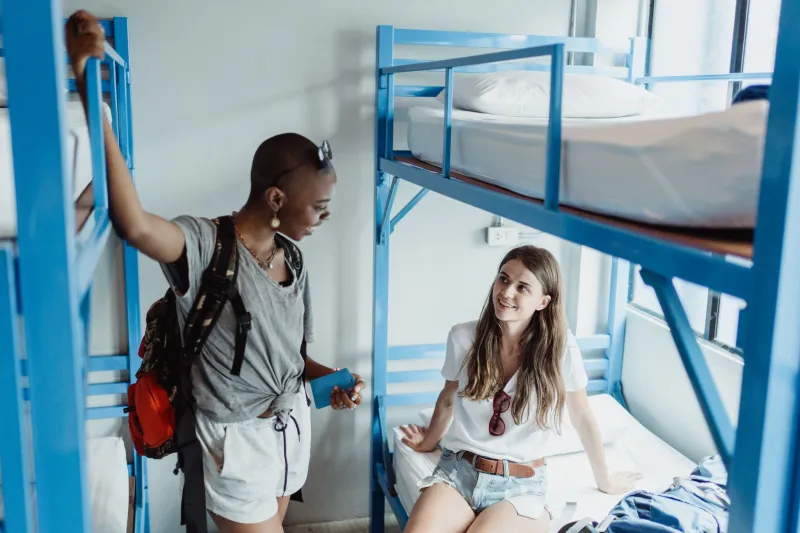
Nobody books a hostel dorm bed thinking, this is where I'll spend the next half year of my life. You roll in with a single backpack, maybe a loose itinerary, and a vague plan to catch a bus to the next city in 48 hours. And then something happens — or more accurately, a whole quiet series of small things happens — and suddenly you're helping the front desk guy remember which locker key belongs to which guest.
This is what the backpacker community has started calling the "hostel flip": the moment a throwaway overnight stop transforms into an indefinite stay. It happens more than you'd think, and the people it happens to rarely see it coming.
The Night That Changed the Plan
Talk to enough long-term hostel residents and you start to notice a pattern. The story almost always starts the same way: they were just passing through.
Marcus, a 29-year-old from Portland, Oregon, booked a single night at a hostel in Medellín, Colombia while waiting on a connecting bus ticket to Cartagena. He ended up staying four months. "I got there on a Tuesday," he says. "By Thursday I knew five people's names, had a favorite coffee spot two blocks away, and had been invited to a birthday party. By the time the weekend hit, leaving felt weird."
For Jess, a graphic designer from Austin who'd taken a sabbatical to backpack through Southeast Asia, the flip happened in Chiang Mai, Thailand. She'd given herself three nights. She stayed eleven weeks. "I kept telling myself I'd leave after the cooking class. Then after the weekend market. Then after the hiking trip a guy from the hostel organized. There was always one more thing."
That "one more thing" is the engine behind almost every long-haul hostel story. It's rarely a single dramatic moment of revelation — it's an accumulation of low-key, genuinely good days.
What Long-Term Stays Actually Look Like (Economically Speaking)
Here's the part that surprises most Americans who've never done it: staying longer is almost always cheaper per day than moving around constantly.
Transportation is one of the biggest expenses for budget travelers, and it adds up fast — buses, trains, ride-shares, the occasional flight when you're trying to cover ground. When you stop moving, that cost drops to nearly zero. Many hostels also offer weekly or monthly rates that can cut the nightly price by 30 to 50 percent. Throw in access to a hostel kitchen and you're suddenly cooking your own meals instead of eating out three times a day.
Marcus estimates he was spending around $28 a day in Medellín once he'd negotiated a long-stay rate and settled into a routine. "Back home in Portland I was spending that much on lunch," he says. The math of indefinite travel becomes a lot more manageable when you stop treating it like a vacation and start treating it like a temporary life.
Some hostels actively cater to this crowd — offering work exchange programs where travelers help with reception, cleaning, or social media in exchange for a free or heavily discounted bed. It's not glamorous work, but it funds weeks of exploration in places that tourists on two-week itineraries never reach.
The Hostel Community as an Anchor
Ask any long-term hostel resident why they actually stayed, and they'll eventually stop talking about cheap rent or good weather and start talking about people.
Hostels have a social gravity that's hard to explain until you've felt it. The common room becomes a rotating cast of characters — some passing through, some, like you, sticking around longer than planned. The people who stay longer become the unofficial connective tissue of the place. They know where to get the best street food. They know which day the local market runs. They're the ones who organize the group trip to the waterfall that doesn't show up on any tourist map.
Jess describes the social ecosystem of her Chiang Mai hostel like a small, slightly chaotic neighborhood. "There were maybe six or seven of us who'd been there for weeks. New people would arrive, and we'd sort of absorb them into whatever we had going on. It felt less like a hostel and more like a share house where the roommates kept changing."
This is the part that most travel content glosses over: the hostel community itself becomes a reason to stay. Not just the destination, not just the low cost of living — the actual web of human connection that forms when you put a bunch of curious, open-minded people in the same building for long enough.
The Hidden Gems That Only Slow Travelers Find
There's a version of travel that's about checking boxes — the famous landmarks, the Instagram locations, the sites that show up on every "Top 10" list. And then there's the version that only reveals itself when you slow down enough to actually become a temporary local.
The neighborhood bar that doesn't open until 10pm. The hiking trail the hostel owner's cousin showed you on a hand-drawn map. The community art project happening in a building three streets over that nobody's written about yet. These are the things that long-term hostel travelers accumulate like quiet treasures, and they're almost entirely invisible to the person who's in town for 36 hours.
Marcus still talks about a neighborhood in Medellín he stumbled into during his third week — a hillside barrio with murals covering nearly every surface, accessible by a free public escalator system built into the hillside. "I'd been there a month before I found it. A tourist on a two-day trip would never make it there."
Slow travel, it turns out, is less a philosophy and more a side effect of finding somewhere genuinely worth staying in.
Should You Let Yourself Get Flipped?
Not every destination is going to grab you the way Medellín grabbed Marcus or Chiang Mai grabbed Jess. Some places are genuinely great for a night or two and nothing more. The hostel flip isn't something you manufacture — it's something you recognize when it's happening.
The best advice from people who've lived it? Don't fight the feeling when it shows up. Keep your onward plans loose, especially early in a trip. Give yourself permission to miss a bus if the reason for missing it is good enough. And pay attention to that specific kind of comfort that starts to feel less like travel and more like belonging.
Budget travel gives you that option in a way that five-star hotels simply don't. When your daily costs are low and your accommodation comes with a built-in community, the math and the mood both tend to say: stay a little longer.
Sometimes a little longer turns into six months. Sometimes it turns into the best story you'll ever tell.