Don't Get Burned: How to Decode a Hostel Listing Before You Hit Book
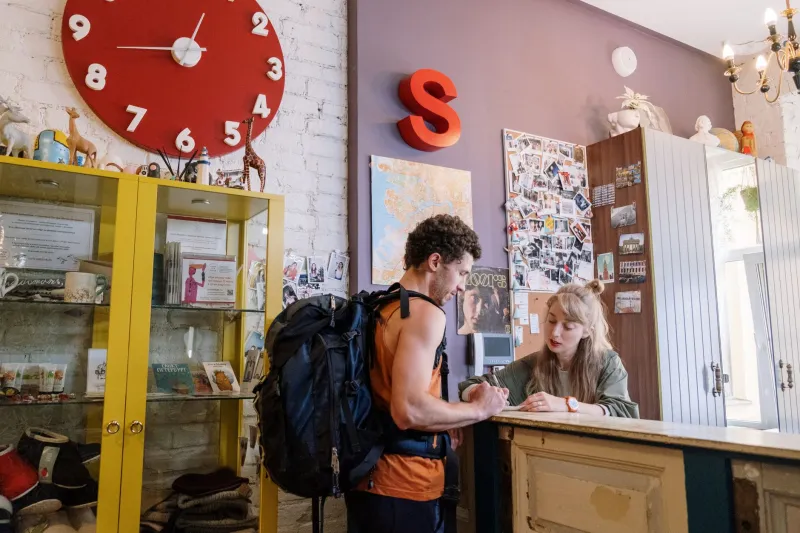
You've got two weeks, a tight budget, and a shortlist of hostels that all look kind of amazing online. The photos are warm and inviting, the descriptions use words like "vibrant community" and "cozy atmosphere," and the ratings hover somewhere between 8.2 and 9.1. So how on earth do you choose?
Here's the uncomfortable truth: hostel listings are marketing materials first and honest assessments second. That doesn't mean they're lying to you — it just means you need to know how to read them the way a seasoned traveler does. Once you crack the code, booking the right place becomes a whole lot less of a gamble.
The Language of Hostel Descriptions (And What It's Really Saying)
Hostel copywriters have a vocabulary all their own, and certain phrases are practically a secret language. Learning to translate them will save you from waking up in the wrong place.
"Perfect for party lovers" — This one's pretty upfront. Expect bass-heavy music until 2 a.m., a bar that doubles as the common room, and dorm mates who won't be quiet until they absolutely have to be. If that's your scene, great. If you need seven hours of sleep to function, keep scrolling.
"Social atmosphere" — A softer version of the above. This usually means the hostel actively encourages mingling: group dinners, pub crawls, communal kitchens designed for conversation. Still lively, but not necessarily a nonstop rager.
"Laid-back vibe" — Translation: slower pace, fewer organized events, guests who are more likely to be reading on the patio than shotgunning beers. Great for solo travelers who want to connect on their own terms.
"Centrally located" — Almost always true, but worth cross-checking on a map. "Central" in a major city can still mean a 25-minute subway ride from the neighborhoods you actually want to explore.
"Boutique hostel" — Usually signals smaller dorms, more design-forward spaces, and a slightly higher price point. Often (not always) quieter than larger party-oriented properties.
Red flag phrases to watch for: "under renovation," "upcoming improvements," or any mention of construction that doesn't include a completion date. Also be wary of descriptions that are suspiciously vague — if a hostel can't tell you anything specific about what makes it special, that's often because nothing does.
Reading Photos Like a Pro
Hostel photography has gotten seriously sophisticated. Wide-angle lenses, golden-hour lighting, and strategic staging can make a cramped six-bed dorm look like a design hotel. Here's how to see past it.
Look at the beds, not the décor. Cute murals are nice, but what you're actually sleeping on matters more. Are the bunks metal with guardrails? Do they have individual reading lights and power outlets? Is there a curtain for privacy? These functional details rarely get highlighted but are almost always visible if you look closely.
Check the bathroom-to-guest ratio. If the listing shows 30 beds and you can only spot two bathroom doors in the photos, that's a math problem you'll feel every morning.
Assess the common areas for authenticity. A common room full of actual guests — laptops out, people mid-conversation, someone eating cereal — is a better sign than a perfectly staged empty space with matching throw pillows. Real hostels look lived-in because they are.
Reverse image search the hero shots. This sounds paranoid, but it's a legitimate trick. Some listings use stock photography or images from entirely different properties. If a photo shows up on 12 different hostel websites, that's your cue to be skeptical.
Review Patterns That Reveal the Real Social Culture
Star ratings are a starting point, not the whole story. What you want to dig into is the texture of the reviews — the specific language people use and the patterns that emerge across dozens of them.
Look for reviews from solo travelers specifically. If you're traveling alone, their experience is going to be much closer to yours than a couple's or a group's. Search for phrases like "met great people" or "hard to connect" to get a feel for how socially active the hostel really is.
Pay attention to what people complain about, not just what they praise. A hostel with a 9.0 rating and recurring mentions of thin walls, noisy common areas, or inconsistent Wi-Fi is telling you something real. A few complaints in isolation don't mean much — a pattern across 40 reviews absolutely does.
Check the recency of reviews. Hostels change ownership, management, and culture all the time. A property that was beloved in 2021 might have completely different energy now. Prioritize reviews from the last six months, and treat anything older than a year as background context only.
Notice how the hostel responds to criticism. A property that replies to negative reviews with genuine accountability (not defensive corporate-speak) is usually one that actually cares about guest experience. Dismissive or passive-aggressive responses to complaints? That tells you exactly how they'll handle issues when you're the one raising them.
Matching the Hostel to Your Actual Travel Style
The best hostel isn't the highest-rated one — it's the one that fits how you travel. Being honest with yourself about this before you book will save a lot of frustration.
If you're a light sleeper or early riser, filter hard for properties that explicitly mention quiet hours, offer private rooms alongside dorms, or cater to older backpackers. Don't assume a party hostel will be quiet on weeknights — it usually won't.
If you're working remotely, look for listings that specifically mention reliable Wi-Fi speeds (not just "free Wi-Fi"), dedicated work areas, and a culture that accommodates guests who aren't there purely to socialize. Reviews from digital nomads are gold here.
If you're hoping to make real connections, the hostels with organized communal dinners, walking tours led by staff, or even just a well-placed kitchen table are your best bet. Community doesn't happen by accident — it's usually designed in.
If you're traveling as a couple or with a friend, consider whether a party dorm is actually what you need or whether a small private room at a social hostel gives you the best of both worlds.
One Last Trick: Check Their Social Media
A hostel's Instagram or TikTok presence (or lack thereof) can reveal a lot. Properties that post regularly and show real guests, real events, and real moments — not just aesthetic shots of the building — tend to have active, engaged communities. If their last post was eight months ago, that might mean the energy has fizzled, the management has changed, or they just don't care enough to show you what's happening there.
DM them a question. Seriously. How fast they respond and how genuinely they answer tells you more about the staff culture than any listing ever could.
The hostel that's right for your trip is out there — you just have to know where to look and what to ignore. Spend twenty extra minutes doing this homework before you book, and you'll spend a lot fewer nights staring at the ceiling wondering how you ended up here.